
Meaning of Handloom and Power loom
The handloom is a manually operated loom used to weave cloth without the aid of electric power. This is a woven fabric that uses mechanical energy of the weaver and the motion of the handloom is purely manually operated instead of use of electric energy.
Loom is actually a device used to weave patterns on fabric and the process is called weaving. Power looms, on the other hand, are fundamentally different from handlooms and are powered mechanically rather than using human power to weave patterns into cloth.
Handloom
A handloom is a type of loom used to weave cloth or patterns on cloth and is operated manually without the aid of electric power. What started as a mechanism to furnish necessities has become a specialized tool for the handicraftsman specializes in furnishing art and luxury fabrics.
The growing textile industry has created a vast demand for the handloom weavers which shaped the much of the 19th century cotton industry. No one exactly knows how or when weaving began, but the idea of weaving clearly predates the loom by at least thousands of years. However, the once commodity-generating sector is dying owing to the rise of more efficient modern looms such as power looms.
Power loom
A power loom is a type of mechanically powered loom driven by a steam engine or electric power used to weave cloth. It was not until the 1850’s that the power loom industry really came into the picture, owing to the rising demand of cotton and scarcity of production.
Power looms are a major shift from the conventional handlooms that once dominated the textile industry. As they are mechanically powered, they work at least ten times faster than their handloom counterparts, thereby controlling much of the fabric market. However, a power loom can only replicate a limited variety of designs and patterns.
Difference between Handloom and Power loom
Both are tools used to weave patterns of thread into cloth for making woven fabric such as cotton, but this is where the similarities end. This article highlights some key points comparing the two weaving tools.
- Operation of Handloom and power loom
A loom is simply a device used to weave cloth and tapestry and operated wholly or partly by human hands. Manually operated weaving is done on pit looms or frame looms. A pit loom, as the name suggests, is a type of loom set on the floor facing a pit so that yarn can get moisture and two peddles set for the weaver to operate. A frame loom is a self-supported loom that sits above the floor with almost similar mechanism to what the ground looms hold and are mainly used to produce twill, sating fabric. However, both looms can be used to weave malkha cloth.
- Efficiency of Handloom Vs. power loom
A power loom is mechanized loom which runs by steam or electric power. The looms are driven by a steam engine by belts which lead to more effective and efficient output, plus higher quality of fabric produced compared to handlooms. The handlooms, on the other hand, are used to weave fabric using hand and loom made from wood and the resultant yarn varies according to the materials used and the skill of the weaver, which may result in a less effective fabric. The handloom is the oldest type of loom used for weaving, thus cannot produce complex designs like power looms.
- Features in Handloom Vs. Power loom
Both handlooms and power looms use a small carrier device called shuttle for yarn insertion, except warp threads are raised and lowered by manual shedding in handlooms which requires higher warp shed, which accounts for high-quality woven fabric. Power looms are modern looms with higher production capacity than handlooms, plus they are able to produce complex designs with less or no human effort. Although, initial investment is high in power looms, they operate at much higher speeds than their handloom counterparts which results in the production of more variety of designs.
Handloom vs. Power loom: Comparison Chart
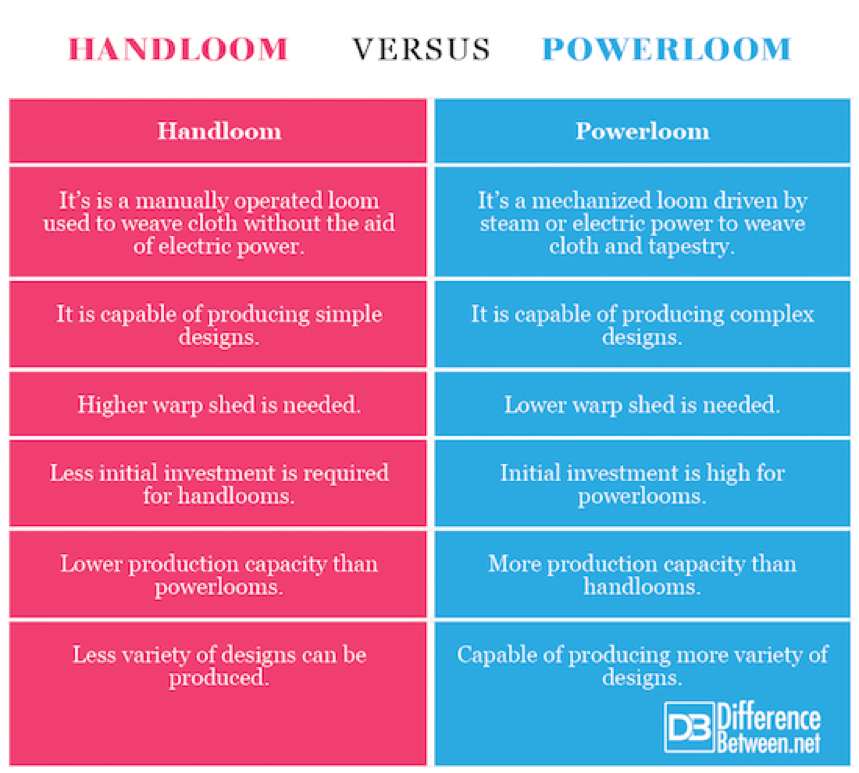
Summary of Handloom Verses power loom
Although both handlooms and power looms are tools used for weaving patterns or thread into cloth, they are fundamentally different in the way they operate. Handlooms are manually operated looms used for weaving in which picking and beating is done manually by human hands, whereas power looms are mechanised looms driven by stem engines or electric power in which shedding, picking and beating are done automatically rather than manually. The features alone indicate the main advantages of the more efficient power looms over the conventional manually operated handlooms. Handloom industry is dying slowly owing to the rise of more efficient and effective power looms which are capable of producing effective designs at much higher speeds.

